Michigan History
Michigan Underworld
Gangsters, Rumrunners, and Hideouts in the Prohibition Years
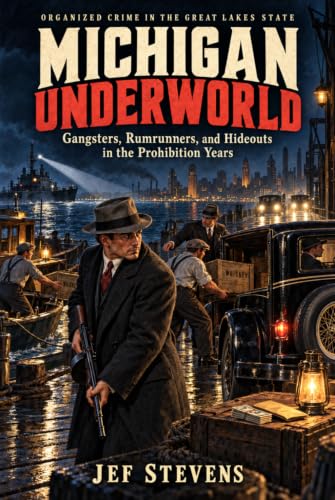
About the book
A quiet Michigan bungalow held two guns linked to the St. Valentine’s Day Massacre. Its occupant was living under another name.
Chicago’s underworld reached across state lines—and Michigan offered much more than a place to hide.
In Michigan Underworld, Jef Stevens follows the river crossings, back roads, businesses, and family homes that carried organized crime through the Prohibition years. Along the Detroit River, liquor crews moved cargo across an international border. In Detroit, the Purple Gang turned a neighborhood reputation into a feared name. Across the state, bank robbers, fugitives, and underworld investors brought danger into places where ordinary people lived and worked.
From a stolen Detroit News payroll to Fred Burke’s bungalow, from Grand Haven’s armed resistance to a fugitive’s overnight refuge in Sault Ste. Marie, these stories reveal how closely criminal enterprise could coexist with everyday life.
Drawing on court decisions, contemporary newspapers, FBI records, and local histories, Stevens follows the evidence while keeping the people behind the headlines in view: cleaners facing intimidation, bank employees confronting gunmen, families sheltering relatives, and officers whose routine duties turned deadly.
Featuring maps and atmospheric black-and-white illustrations, Michigan Underworld brings the state’s Prohibition landscape into focus—one landing, hotel, bank, and hidden room at a time.